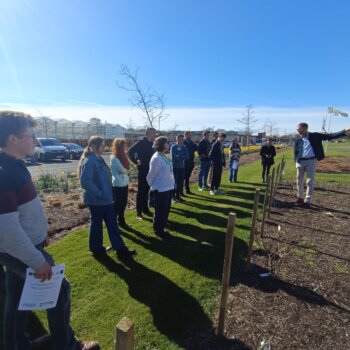
Students’ experiences during their apprenticeships in horticulture
The apprenticeship in horticulture is now up and running in the Teagasc College in the National Botanic Gardens
Currently there are over 30,000 apprentices on over 80 programmes nationally with over 10% of these apprentices’ women
Apprenticeships are big news these days in lots of employment areas, as the fundamental model of “earning while you learn” becomes a real alternative for people entering the workforce and gaining valuable training while employed.
Currently there are over 30,000 apprentices on over 80 programmes nationally with over 10% of these apprentices’ women.
Teagasc as an organisation is strongly invested in the training needs of the horticulture sector through the formal QQI courses that are offered in the National Botanic Gardens in Dublin and in the Kildalton in Kilkenny.
The apprenticeship model involves students, their employers and the Teagasc College in the National Botanic Gardens. Teagasc delivers and assesses the academic part of the programme, which takes place over 50 block-release days in each year at the college in Dublin. Some of these days are delivered online to allow for remote engagement.
The apprenticeship in horticulture is now up and running in the Teagasc College in the National Botanic Gardens and 60 apprentices have registered since it started in 2023.
They are working in all aspects of horticulture across all four provinces including nurseries, landscapers, garden centers, parks, and the food sector.
Growtrade.ie spoke with the 2nd year horticulture apprentices in the nursery production stream about their experiences.
1. What has motivated you to pursue a professional career in horticulture?
Rodica Cojocaru (The Plant Collector):
“Having been involved in this field for nearly two years, I’ve developed a genuine interest in the study of plants – their environments, methods of propagation, and their practical uses. The area of ornamental horticulture, in particular, is both complex and diverse, far from easy, yet deeply rewarding. What draws me even more is the idea of promoting plant care, helping others learn how to nurture trees and plants properly, how to water and feed them appropriately, prune them at the right time, and so on. Horticulture is, above all, an active and engaging profession. Gaining new knowledge in this area not only fuels my passion, but also helps me grow the potential to become a true expert over time.”
Aisling O’Connell (Tully Nurseries):
“Working in horticulture allows me to connect with the natural world. In such a busy and sometimes stressful society, horticulture offers a chance to take a step back from that, but also to look at ways we can improve sustainability and the circular economy.”
Shannon Clancy (Tirlán):
“You’ll never know everything about plants, there’s always something to learn. You can be equally as surprised today as you were yesterday. Plants don’t just look pretty, but they provide health benefits too. I come from a farming background, so learning about soil, fertiliser and weeds are also really beneficial for me.”
2. What academic achievement or moment in your studies are you most proud of so far?
Rodica Cojocaru:
“One of the achievements I am most proud of was my ability to successfully sell plants from the nursery where I work, shortly after beginning my horticultural studies. This success was not only practical, but also based on my own notes and research, which helped me better understand the products and communicate effectively with customers. Clients were satisfied with the information and advice I provided, and this was reflected in positive feedback, both from them and from my team leader and colleagues. It was a rewarding confirmation that the knowledge I was gaining through my studies could be applied immediately and effectively in a real-world setting.”
Aisling O’Connell:
“My proudest moment was receiving my results from my first year of the apprenticeship. All distinctions! Never before have I got such good grades. I was proud that I put the work in and it paid off.”
Shannon Clancy:
“Getting distinctions in all my modules in year 1.”
3. What has been the most significant challenge you have encountered during your studies?
Rodica Cojocaru:
“The greatest challenge I’ve faced during my studies was adjusting to the scientific depth of plant biology and soil science, especially at the beginning. While the visual and practical aspects of horticulture came more naturally to me, understanding the underlying biological processes required extra effort and time. However, this challenge turned into an opportunity for growth. I dedicated myself to learning and gradually developed a more structured and informed approach to both study and practice. Overcoming this obstacle not only improved my academic performance but also strengthened my confidence in my abilities as a future horticulturalist.”
Aisling O’Connell:
“The greatest challenge without question has been juggling my studies and working at the same time. Managing my time has been a work in progress, but I’m better able to map out my time.”
Shannon Clancy:
“Trying to balance work, college and the farm can be difficult. I don’t want my college work to be less than satisfactory, because of how busy I can be.”
4. What is the most valuable piece of advice you have received from a professional within the horticultural sector?
Rodica Cojocaru:
“The best advice I’ve received from someone in the industry was: “let the plants guide your work-observe them carefully, and they will show you what they need.” This piece of guidance taught me the importance of observation, patience, and responsiveness. Horticulture is not just about applying techniques, but about developing a relationship with the living organisms we care for. Understanding plant signals, whether it’s signs of stress, lack of nutrients, or improper positioning, makes a real difference. That advice encouraged me to stay curious and to never stop learning, even from the smallest details in nature.”
Aisling O’Connell:
”Someone once told me that you don’t work in horticulture for the money, you do it for the love of it. I may not get rich, but I know that working in horticulture will make me happy, and that’s ok with me.”
Shannon Clancy:
“Stick with everything, it’ll always be worth it in the end.”
The apprenticeship in horticulture is for anyone who wishes to pursue a career in the horticultural sector or existing personnel employed in a horticultural facility that would like to gain a recognised qualification.